
Cybersecurity threats continue to evolve, and organizations cannot afford to rely on reactive security strategies. Businesses need structured methods that help them identify risks early and design secure systems from the ground up. This is exactly where threat modeling comes into play. Many security professionals and business leaders ask, what are the four stages of threat modeling, and how can those stages improve security outcomes?
Threat modeling is a proactive approach that helps teams identify, analyze, and reduce risks before attackers exploit vulnerabilities. Instead of waiting for a breach to happen, organizations can anticipate threats and strengthen their security posture during planning and development. In this article, we will break down the four stages of threat modeling and explain how they support modern cybersecurity consulting services.
What Are the Four Stages of Threat Modeling?
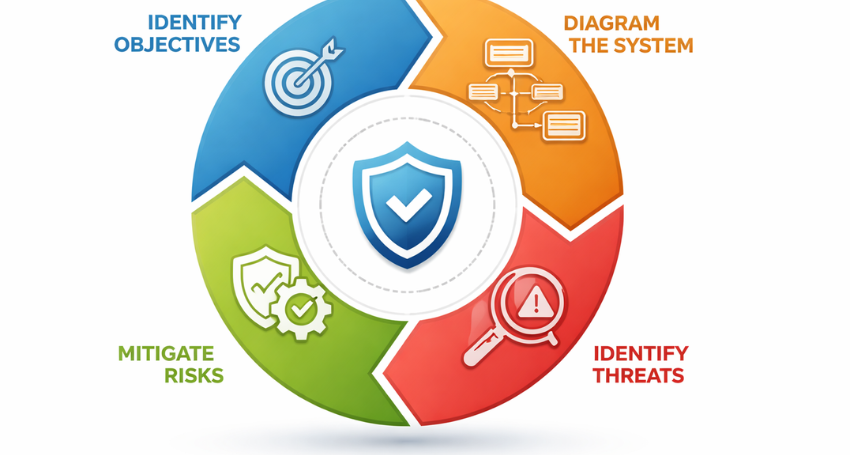
Understanding what are the four stages of threat modeling begins with recognizing that threat modeling is a structured process rather than a one-time activity. Each stage builds on the previous one, creating a clear path from system understanding to risk reduction.
The four key stages include:
- Defining the system
- Identifying threats
- Assessing vulnerabilities and risks
- Mitigating and validating controls
Let’s look at each stage in detail.
Stage 1: Defining the System and Its Assets
Before identifying threats, teams must clearly understand the system they want to protect. This stage focuses on mapping the architecture, workflows, data flows, and key digital assets involved.
Security teams typically create diagrams that show how users, applications, networks, and cloud services interact. For example, when discussing cloud-native environments, businesses often explore questions like what is the benefit of Azure AKS and how container orchestration affects security boundaries. Understanding infrastructure decisions like this helps define where risks may appear.
At this stage, organizations should ask:
- What data is sensitive or business-critical?
- Where does data enter and leave the system?
- Which components interact with external services?
By clearly defining the environment, teams create the foundation for accurate threat analysis.
Stage 2: Identifying Potential Threats
Once the system is mapped, the next step is identifying possible threats. This stage focuses on understanding how attackers might exploit weaknesses. Security professionals use frameworks such as STRIDE or attack trees to systematically explore threat scenarios.
Common threat categories include:
- Unauthorized access
- Data tampering
- Denial-of-service attacks
- Privilege escalation
- Insider threats
During this process, teams consider both technical and operational risks. For example, misconfigured cloud environments or insecure APIs can become entry points for attackers. Threat identification works best when development teams, IT staff, and security consultants collaborate closely.
Furthermore, this stage encourages organizations to think like attackers, which often reveals security blind spots that traditional audits may miss.
Stage 3: Assessing Vulnerabilities and Risk Levels
After identifying threats, the next stage involves evaluating their likelihood and potential impact. Not every threat carries the same level of risk, so prioritization becomes essential.
Teams typically assess:
- How likely is the threat to occur?
- What business damage could result?
- How difficult would exploitation be?
Risk scoring helps organizations focus resources on high-impact vulnerabilities first. For example, a weak authentication mechanism protecting sensitive customer data may rank higher than a minor configuration issue.
This stage also supports compliance and risk management goals by creating clear documentation of identified risks. As a result, leadership teams gain visibility into security priorities and can allocate resources more effectively.
Stage 4: Mitigating Risks and Validating Controls
The final stage transforms analysis into action. Here, teams design and implement security controls that reduce or eliminate identified threats. Mitigation strategies may include:
- Stronger authentication mechanisms
- Network segmentation
- Encryption improvements
- Secure coding practices
- Continuous monitoring solutions
Importantly, threat modeling does not end once controls are implemented. Teams should validate their effectiveness through testing, simulations, or security assessments. This ongoing validation ensures that defenses remain effective as systems evolve.
Moreover, regular reviews help organizations adapt to new threats and technology changes, ensuring long-term resilience.
Why Threat Modeling Matters for Modern Businesses
Understanding what are the four stages of threat modeling empowers organizations to shift from reactive security to proactive defense. Instead of patching vulnerabilities after deployment, teams can address security concerns early in the development lifecycle.
This proactive approach offers several benefits:
- Reduced security incidents and downtime
- Improved compliance readiness
- Faster, more secure product development
- Clear communication between technical and business teams
As cybersecurity challenges grow, structured methods like threat modeling become essential for maintaining trust and operational continuity.
Integrating Threat Modeling Into Your Security Strategy
Many organizations struggle to implement threat modeling effectively because they lack internal expertise or structured processes. This is where cybersecurity consulting partners provide value. Experienced consultants help businesses identify gaps, apply best practices, and integrate threat modeling into existing workflows without disrupting productivity.
By combining technical expertise with practical business insight, organizations can make informed decisions that strengthen security while supporting innovation and growth.
Conclusion
If your organization wants to improve risk management and build secure systems from the start, threat modeling is a smart investment. Understanding what are the four stages of threat modeling is only the beginning; applying them correctly makes the real difference.
At Amins Consult, we help businesses develop practical cyber security strategies that align with their goals. Whether you are refining your security architecture, evaluating cloud environments, or looking to improve threat visibility, our experts can guide you through every step. Contact us to discover how a proactive security approach can protect your business and support long-term success.