
Modern applications rely on seamless communication between multiple services, platforms, and devices. As businesses scale their digital ecosystems, managing this communication becomes increasingly complex. That’s where the question arises: What is API Gateway, and why is it essential for modern IT architecture?
If your organization is building cloud-native applications, microservices, or enterprise integrations, understanding API Gateway is no longer optional; in this blog, it’s critical.
What is an API Gateway?
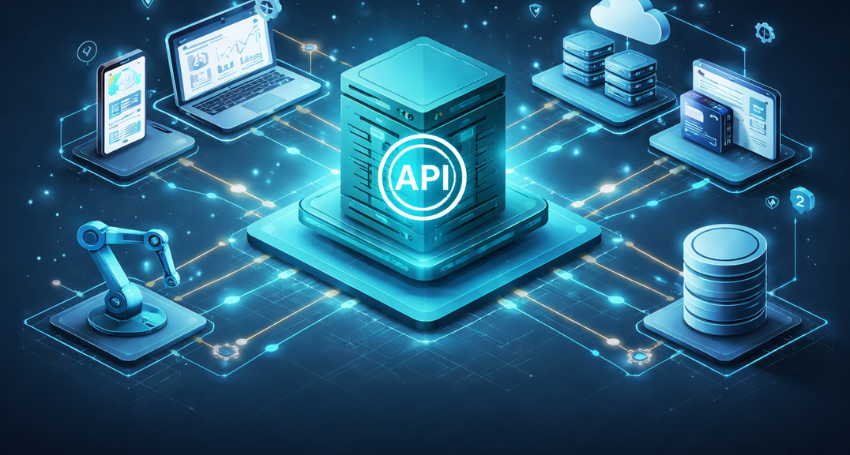
At its core, an API Gateway refers to a centralized management layer that sits between clients (like web apps, mobile apps, or third-party systems) and backend services. Instead of clients making multiple direct calls to different services, they send requests to a single entry point, the API Gateway, which then routes those requests to the appropriate backend services.
In simple terms, an API Gateway acts as a “traffic controller” for APIs.
It handles:
- Request routing
- Authentication and authorization
- Rate limiting
- Load balancing
- Monitoring and analytics
- Response aggregation
Because of these capabilities, API Gateways play a vital role in microservices architecture and enterprise system integration.
Why Businesses Need an API Gateway
As companies adopt digital transformation strategies, they often shift toward distributed systems and cloud environments. However, without a centralized control layer, managing APIs can become chaotic.
Here’s why implementing an API Gateway makes sense:
1. Enhanced Security
Security remains a top priority for any digital infrastructure. An API Gateway enforces authentication protocols such as OAuth, JWT, and API keys. It also prevents direct exposure of backend services to the public internet.
As a result, businesses reduce security vulnerabilities while maintaining secure communication channels.
2. Improved Performance
API Gateways can cache responses, aggregate multiple service calls into one request, and optimize traffic routing. Consequently, applications respond faster and operate more efficiently.
3. Simplified Client Communication
Without an API Gateway, a client may need to call multiple services separately. With a gateway in place, the client makes a single request, and the gateway handles the complexity behind the scenes.
This approach improves both user experience and development efficiency.
How Does an API Gateway Work?
To fully understand what an API Gateway, it helps to visualize the workflow:
- A client sends a request.
- The API Gateway authenticates the request.
- It routes the request to the appropriate backend service.
- It may transform or aggregate responses.
- The gateway returns a unified response to the client.
Because it centralizes control, teams can manage policies, logging, analytics, and throttling in one place instead of configuring each microservice individually.
API Gateway in Microservices Architecture
Microservices architecture breaks applications into smaller, independent services. While this approach increases scalability and agility, it also introduces communication complexity.
An API Gateway solves this challenge by:
- Acting as a single entry point
- Managing service discovery
- Enforcing consistent security policies
- Providing centralized monitoring
Therefore, organizations that adopt DevOps and cloud-native development often rely heavily on API Gateway solutions.
Key Features of a Modern API Gateway
When evaluating API management solutions, businesses should look for the following features:
Authentication and Authorization
A reliable API Gateway validates users and ensures that only authorized systems access backend services.
Rate Limiting and Throttling
To prevent system overload or abuse, API Gateways control how many requests users can make within a specific timeframe.
Load Balancing
Gateways distribute traffic across multiple service instances, ensuring high availability and optimal performance.
Monitoring and Analytics
Real-time insights allow businesses to track API performance, detect anomalies, and improve system reliability.
Common Use Cases of API Gateway
Understanding What is API Gateway also involves knowing where it fits best. Here are common scenarios:
- Cloud-native application development
- SaaS platform integrations
- Enterprise system modernization
- Third-party API management
- Mobile and web backend services
Because digital ecosystems continue to grow, API Gateway implementation becomes essential for scalable and secure operations.
Benefits of API Gateway for Enterprises
Implementing an API Gateway offers long-term strategic advantages:
- Stronger security posture
- Centralized API governance
- Faster development cycles
- Improved scalability
- Better user experience
Moreover, organizations gain better visibility into API usage patterns, which supports data-driven decision-making.
Choosing the Right API Gateway Strategy
While understanding What is API Gateway is important, implementing it correctly matters even more. Businesses must consider:
- Cloud vs. on-premise deployment
- Integration with existing infrastructure
- Compliance requirements
- Scalability needs
- DevOps compatibility
Working with experienced technology consultants ensures a smooth implementation process and long-term success.
How Amin’s Consult Can Help
At Amin’s Consult, we understand that modern businesses require secure, scalable, and future-ready API architectures. Whether you’re modernizing legacy systems, adopting microservices, or enhancing cloud integration, our team provides tailored API management and digital transformation solutions.
Instead of offering generic implementations, we analyze your infrastructure, security requirements, and growth plans to design an API Gateway strategy that aligns with your business objectives.
Final Thoughts
So, What is API Gateway? It’s more than just a routing tool. It’s a strategic layer that enhances security, performance, scalability, and manageability in modern application environments.
As businesses continue to evolve digitally, API Gateways will remain a foundational component of cloud-native architecture and enterprise integration. Organizations that implement them correctly gain a significant competitive advantage. If you’re exploring What is API Gateway and how it can strengthen your digital ecosystem, now is the time to take action. Contact us to build a secure, scalable, and high-performance API infrastructure that drives long-term innovation.