
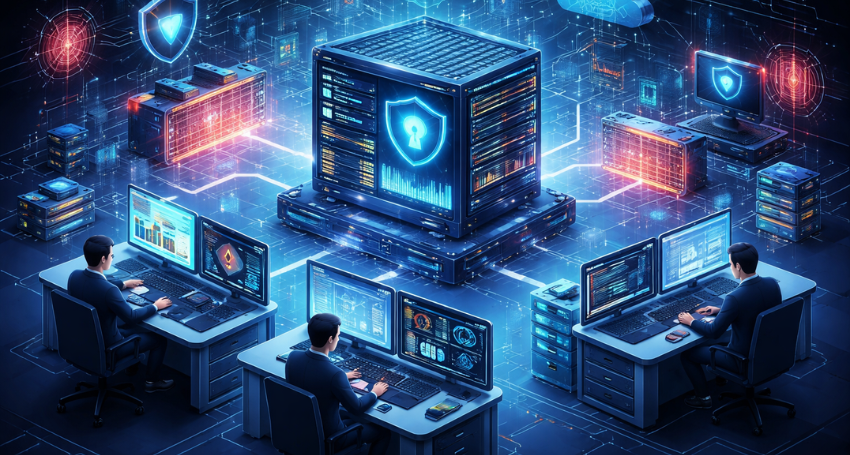
If you’ve ever wondered what is SIEM in cyber security, you’re not alone. As cyber threats grow more advanced and persistent, organizations need smarter ways to detect, analyze, and respond to security incidents in real time. That’s exactly where SIEM comes in.
SIEM stands for Security Information and Event Management. It is a cybersecurity solution that collects, analyzes, and correlates security data from across an organization’s IT environment. In simple terms, SIEM acts as the central nervous system of your security operations. It gathers logs and event data from servers, firewalls, applications, cloud platforms, and endpoints, then turns that data into actionable intelligence.
For businesses aiming to strengthen their cybersecurity posture, understanding what is SIEM in cyber security is the first step toward building a resilient defense strategy in this blog
Why SIEM Matters in Modern Cyber Security
Cyberattacks no longer target only large enterprises. Today, small and mid-sized businesses face ransomware, phishing campaigns, insider threats, and advanced persistent threats (APTs). Because of this evolving landscape, traditional security tools alone cannot provide sufficient visibility.
Here’s why SIEM plays such a critical role:
- Centralized visibility: It consolidates data from multiple systems into one platform.
- Real-time threat detection: It identifies suspicious activity as it happens.
- Incident response support: It provides detailed insights for faster investigation.
- Compliance reporting: It helps meet regulatory requirements such as GDPR, HIPAA, and ISO standards.
Without SIEM, organizations often struggle to connect the dots between isolated security events. With SIEM, security teams can quickly recognize patterns and mitigate risks before damage spreads.
How Does SIEM Work?
To fully understand what is SIEM in cyber security, it helps to look at how it operates.
1. Log Collection
SIEM gathers logs and event data from various sources, including:
- Firewalls
- Intrusion detection systems (IDS)
- Servers and databases
- Cloud services
- Endpoint devices
2. Data Normalization and Correlation
After collecting the data, the system normalizes it into a standardized format. Then, it correlates events across systems. For example, multiple failed login attempts followed by a successful login from an unusual location may trigger an alert.
3. Threat Detection and Alerting
Using predefined rules and behavioral analytics, SIEM identifies anomalies and potential threats. It immediately alerts security teams for investigation.
4. Reporting and Compliance
SIEM platforms generate automated reports that help organizations demonstrate compliance with industry regulations.
Because of this structured process, SIEM enhances both proactive threat detection and reactive incident response.
Key Benefits of Using SIEM Solutions
Organizations that implement SIEM solutions experience measurable improvements in their security operations. Let’s explore some major advantages.
Enhanced Threat Visibility
SIEM provides a holistic view of your network activity. Instead of analyzing separate logs manually, security teams gain centralized monitoring and visibility.
Faster Incident Response
Time is critical during a cyberattack. SIEM reduces response time by detecting and alerting to threats early. As a result, organizations limit damage and reduce downtime.
Improved Security Operations Center (SOC) Efficiency
Security teams often face alert fatigue. SIEM tools filter and prioritize alerts, allowing analysts to focus on genuine risks rather than false positives.
Stronger Regulatory Compliance
Regulatory frameworks require detailed monitoring and reporting. SIEM automates audit trails and compliance documentation, saving time and reducing manual effort.
Clearly, when businesses ask what is SIEM in cyber security, they often discover that it serves as the foundation of effective security operations.
SIEM vs. Other Security Tools
Many people confuse SIEM with firewalls or antivirus software. However, these tools serve different purposes.
- Firewalls control incoming and outgoing network traffic.
- Antivirus software detects and removes malicious files.
- SIEM, on the other hand, analyzes security data across the entire ecosystem.
Rather than replacing other security tools, SIEM integrates with them. It enhances their effectiveness by correlating data and identifying complex attack patterns that standalone tools might miss.
Cloud SIEM and Modern Security Environments
As organizations move to cloud-based infrastructures, SIEM solutions have evolved. Modern SIEM platforms support hybrid and multi-cloud environments, ensuring visibility across on-premises systems and cloud services.
Cloud-native SIEM solutions offer:
- Scalability
- Advanced analytics powered by AI and machine learning
- Lower infrastructure overhead
- Remote monitoring capabilities
For companies undergoing digital transformation, understanding what is SIEM in cyber security becomes even more critical. Without centralized monitoring, cloud environments can introduce hidden vulnerabilities.
Is SIEM Right for Your Business?
Not every organization has the same security needs. However, businesses that handle sensitive data, process financial transactions, or operate in regulated industries benefit significantly from SIEM implementation.
Consider SIEM if you:
- Need 24/7 threat monitoring
- Must meet compliance standards
- Manage complex IT environments
- Want to reduce security blind spots
When implemented correctly, SIEM strengthens overall cybersecurity strategy and supports long-term business resilience.
Partner with Experts for SIEM Implementation
Deploying and managing a SIEM platform requires expertise. Improper configuration can lead to missed alerts or overwhelming noise. Therefore, working with experienced cybersecurity professionals ensures optimal performance and maximum return on investment.
At AminsConsult, we help organizations design, deploy, and optimize advanced cybersecurity solutions tailored to their operational needs. Our team evaluates your infrastructure, identifies gaps, and implements SIEM solutions that align with your business objectives. We also provide ongoing monitoring, threat analysis, and compliance support.
If you’re exploring what is SIEM in cyber security and how it can protect your organization, now is the time to take action. Strengthening your cybersecurity posture today prevents costly breaches tomorrow.
Final Thoughts
So, what is SIEM in cybersecurity? It is more than just a monitoring tool. It is a centralized security intelligence system that empowers organizations to detect threats early, respond quickly, and maintain compliance.
In a world where cyber risks continue to evolve, SIEM stands as a critical pillar of modern cybersecurity strategy. By integrating SIEM into your security operations, you gain visibility, control, and confidence in your organization’s ability to defend against digital threats. Contact us to build a proactive, intelligent, and resilient security framework for your business.